
What happens when the fastest land animal races the fastest human ever recorded? The numbers seem unfair at first glance. A cheetah blasts across the savanna at 70 mph (113 km/h). Usain Bolt, the fastest man in history, peaked at 27.8 mph (44.7 km/h) during his 2009 world record sprint. In a straight 100-meter dash, the cheetah wins by roughly 4 seconds — an eternity in sprinting terms.
But here is the twist few people discuss: over marathon distances, humans are among the best endurance runners on Earth. Not the absolute best in every condition — sled dogs in cold climates and pronghorn antelope over open plains can outperform us. But under hot conditions, humans beat horses, most dogs, and the vast majority of mammals.
This article breaks down the exact science behind speed, why evolution built cheetahs and humans for completely different races, and what peer-reviewed research actually says when you compare the fastest animal versus the fastest human.
Table of Contents
Quick Comparison: Cheetah vs Human at a Glance
How Fast Is a Cheetah? The Exact Numbers
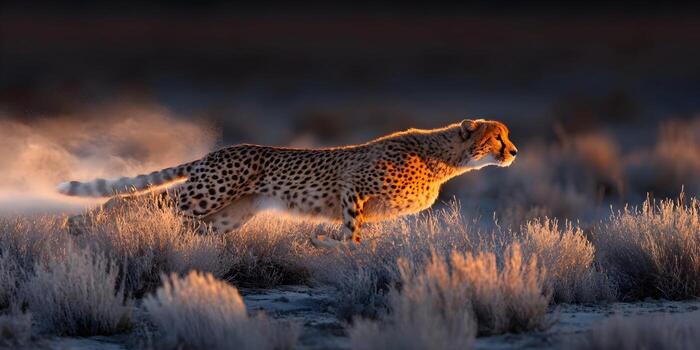
Image Source: Vecteezy
The cheetah's top speed of 70 mph was documented by researchers from the Royal Veterinary College and the Zoological Society of London using GPS tracking collars and high-speed cameras. Their 2013 study, published in Nature, followed wild cheetahs in Botswana and confirmed what wildlife biologists had suspected: no land animal comes close in a sprint.
What Makes That Speed Possible:
🦴 Flexible Spine
Acts like a spring, extending the cheetah's stride to over 20 feet per bound.
💪 Muscle Composition
Exceptionally high proportion of fast-twitch muscle fibers (far more than humans).
🐾 Non-retractable Claws
Function like cleats, gripping the ground for maximum traction.
🫁 Large Nostrils & Lungs
Oxygen intake increases dramatically during a sprint.
⚖️ Lightweight Frame
Weighs only 110–140 pounds, minimizing energy cost.
🎯 Long Tail
Acts as a rudder, allowing sharp turns at full speed.
⚠️ Critical Limitation: A cheetah can only maintain top speed for 20 to 30 seconds. After that, its body temperature spikes to dangerous levels. Lactic acid floods the muscles. The cheetah must stop or risk organ damage.
This is not a bug. It is a feature of evolution. Cheetahs are ambush predators. They do not need to run for miles. They need to explode from hiding, close the gap in seconds, and make the kill before the prey reacts.
Land Speed Ranking: Animals vs Humans
How Fast Is a Human? Breaking Down the Records
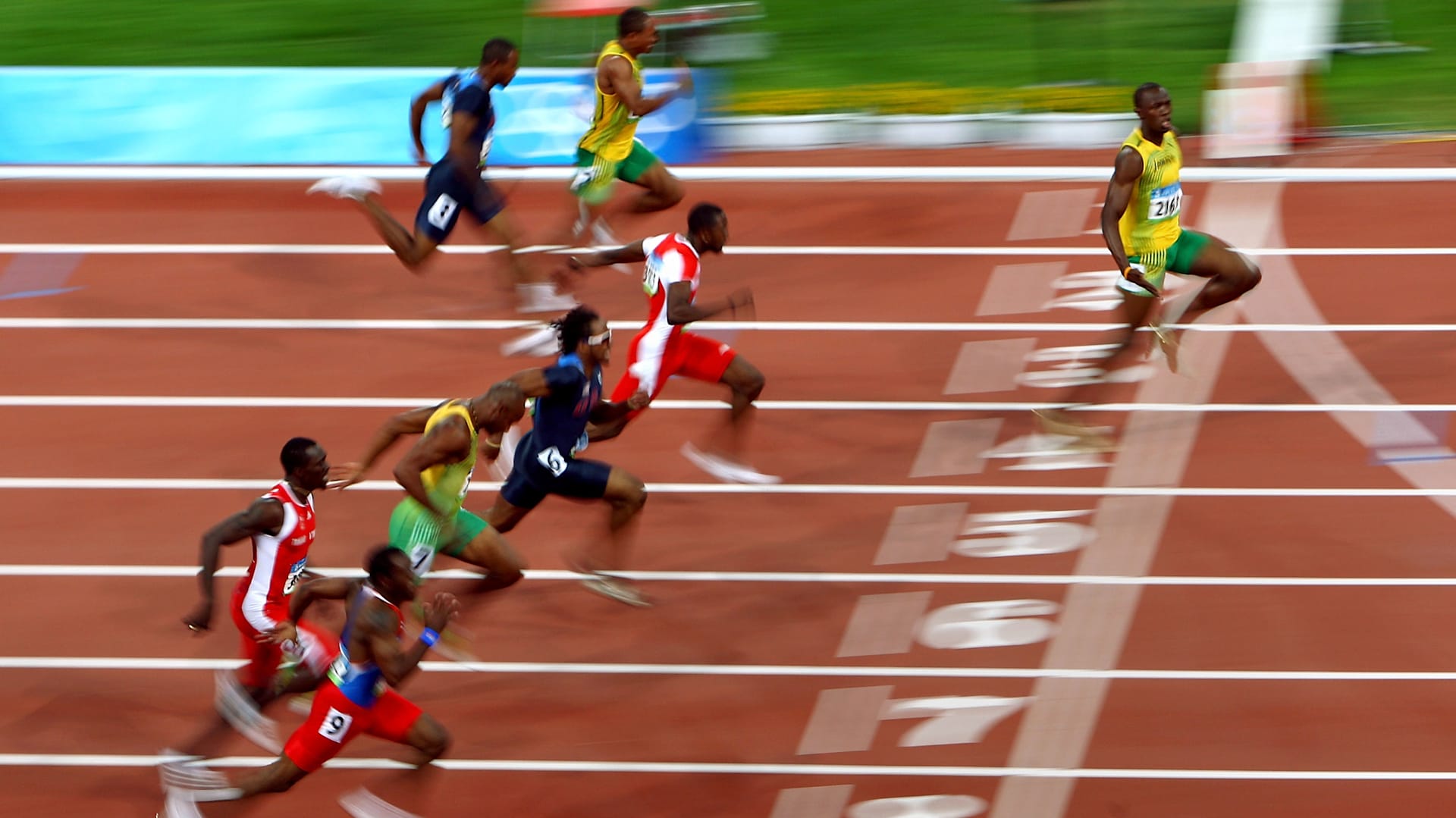
Image Source: Olympics.com
Usain Bolt's 9.58-second 100m record may never be broken. Scientists analyzing his biomechanics found that his stride length was 2.44 meters — roughly 0.4 meters longer than his competitors at the time. Combined with his exceptional stride frequency, this created a speed ceiling no other sprinter has touched.
But Bolt represents the absolute peak. Here is how humans stack up across distances:
The pattern is clear: As distance increases, human speed drops slowly. Animal speed drops dramatically. By the marathon mark, humans are among the best endurance runners on the planet.
Cheetah vs Human: Head-to-Head Race Simulation
Let us imagine a real race. Sarah, a captive cheetah at the Cincinnati Zoo, was clocked at 61 mph during a demonstration run in 2012. Let us use her as our cheetah competitor against Bolt at his peak.
🏁 100 Meters
Cheetah wins by 3.5+ seconds — an absolute demolition in sprinting terms.
🏁 400 Meters
Cheetah still wins, but overheats after 200m. By 300 meters, the cheetah is walking. The gap is closing.
🏁 1 Mile (1,609 Meters)
Human wins by default. The cheetah cannot complete. Overheats and stops. The human finishes in ~4 minutes (elite).
💡 The Reality: The cheetah is built for explosive acceleration, not distance. The human is built for sustained effort, not raw speed. This is the fundamental truth of cheetah vs human.
The Surprising Truth: Humans Are Exceptional Endurance Runners
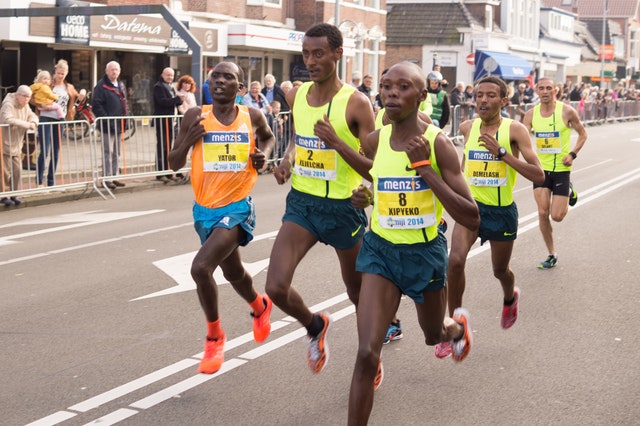
Image Source: Squarespace / Richard Lebert RMT
Here is what most people do not know: humans are among the world's best long-distance runners. Not the absolute best in every condition — sled dogs in Arctic climates and pronghorn antelope over open plains can outperform us. But under hot conditions, we beat horses, most dogs, and the vast majority of mammals.
This is not opinion. It is evolutionary biology backed by peer-reviewed research.
The Evidence: Persistence Hunting
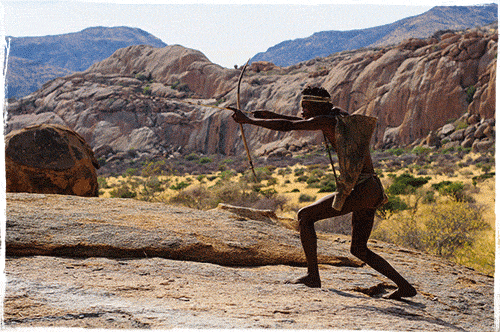
Image Source: Vivobarefoot
Persistence hunting — the practice of running prey to exhaustion — was used by early humans for millions of years. Anthropologists have documented this technique in modern hunter-gatherer tribes in Africa and South America. The method is simple: track an animal, keep it moving, and wait for heat exhaustion to set in.
5 Unique Human Adaptations No Other Primate Possesses:
1. 💧 Sweating System
Humans are the only primates that cool primarily through sweat evaporation. Most animals pant, which limits them to short bursts of activity. A human can run for hours in 100°F heat. A cheetah cannot.
2. 🚶 Bipedal Efficiency
Running on two legs uses roughly 50% less energy than running on four at the same speed. Our straight-legged gait acts like a pendulum, storing and releasing energy with each step.
3. 🦶 Spring-Like Tendons
The human Achilles tendon and arch of the foot store a significant portion of running energy and return it on the next step. This passive energy recovery is highly efficient.
4. 🧠 Nuchal Ligament
This ligament runs from the skull to the spine and stabilizes the head while running. It is found in distance-running animals like horses and dogs — and humans. Sprinters like cheetahs do not have it.
Source: Journal of Human Evolution
5. 🧘 Mental Toughness
Humans can override pain signals through conscious effort. This "central governor" theory suggests the brain allows the body to work harder when it perceives safety. No animal matches this psychological endurance.
Source: Sports Medicine, Noakes et al.
The Science of Body Mass and Speed
In 2017, researchers analyzing 474 species found that the fastest animals cluster around 20 to 70 kilograms — the size of a cheetah, pronghorn, or greyhound. This is known as the "Goldilocks" body mass theory of speed.
Humans, at an average of 60–80 kg, sit at the edge of this range. But our bipedal build and cooling system pushed evolution toward endurance rather than sprint. We traded raw speed for stamina — and that trade made us one of the planet's most successful predators.
Source: Nature Communications, Hirt et al., 2017 — "A general scaling law reveals why the largest animals are not the fastest."
Can a Human Outrun a Cheetah? The Real Answer
The short answer: no in a sprint, yes in a marathon.
A cheetah's body is a specialized tool. Every adaptation — flexible spine, fast-twitch muscles, lightweight frame — serves one purpose: close the gap in under 30 seconds. After that, the tool breaks down.
A human's body is a generalist tool. We are not the fastest, strongest, or most agile. But we are among the most adaptable. We can run, climb, swim, and think our way through problems. And when it comes to sustained movement over distance, we are exceptional.
Real-World Proof: Man vs Horse Marathon

Image Source: BBC News
Since 1980, the town of Llanwrtyd Wells in Wales has hosted an annual Man vs Horse Marathon. The course is 22 miles over rough terrain. In 2004, a human runner named Huw Lobb won the race for the first time. Since then, humans have won multiple times — always on hot days when horses overheat, and humans do not.
🔥 The Lesson: Heat + Distance = Human Advantage. But this is conditional. On cold days, horses usually win. Humans are exceptional endurance runners under specific conditions, not universally superior.
What If? Hypothetical Scenarios
🤔 What if humans had cheetah muscles?
Physically impossible without structural changes. Cheetah muscle fibers generate far more force per contraction, but they attach to bones that would snap under human skeletal structure. Evolution optimized the whole system, not just one part.
🤔 What if cheetahs had human endurance?
They would be formidable predators — capable of sprinting down prey and chasing it for miles. But their hunting strategy does not require this. Ambush is more energy-efficient than pursuit.
🤔 What if we ran on all fours?
Studies of quadrupedal movement in humans show a 15–20% reduction in speed compared to bipedal running. Our hip structure, leg length ratios, and center of gravity are optimized for two legs.
The Full Speed Ranking: 20 Fastest Animals vs Humans
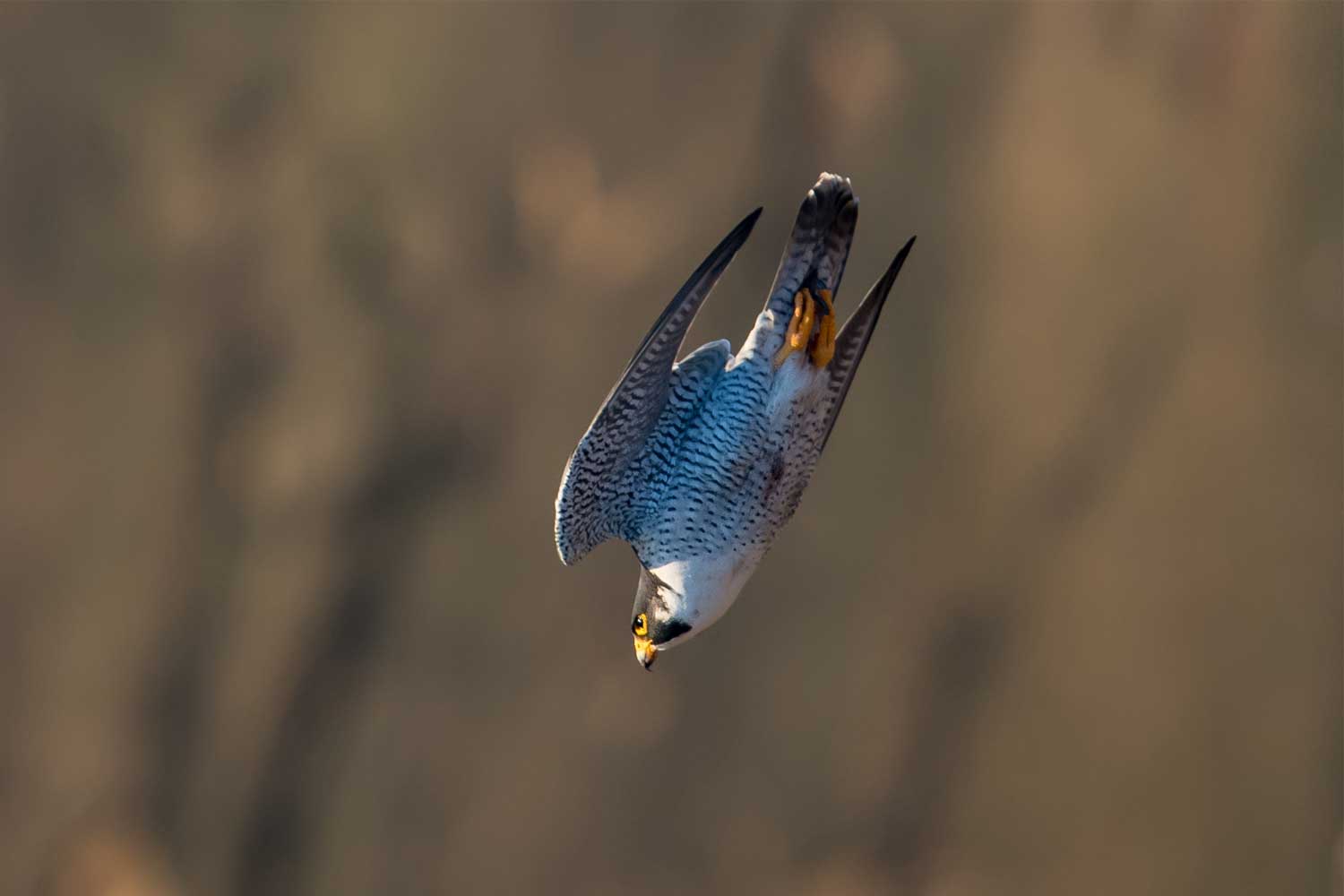
Image Source: Forest Preserve District of Will County
What Runners Can Learn from the Fastest Animals
🐆 From the Cheetah: Explosive Power
- Plyometric training — box jumps, bounding, sprint drills
- Short rest intervals — mimic the cheetah's burst-recover pattern
- Hill sprints — build the power needed for acceleration
🦌 From the Pronghorn: Consistent Pacing
- The pronghorn can maintain 35 mph for 4 miles — a feat no human can match
- Tempo runs at lactate threshold build this sustained speed
- Mental discipline — the pronghorn does not sprint until the final kilometer
🏃 From Human Endurance: The Long Game
- Build aerobic base first — 80% of training should be easy pace
- Heat acclimation — train in warm conditions to optimize sweating
- Fueling strategy — practice race-day nutrition during long runs
FAQ — Your Questions Answered
❓ Can Usain Bolt outrun a lion?
No. A lion runs 50 mph — nearly double Bolt's peak of 28 mph. In a 100-meter sprint, the lion wins by roughly 3 seconds. However, over 400+ meters, Bolt's endurance advantage would grow. Lions overheat faster than humans, though not as quickly as cheetahs.
❓ What animal can a human outrun?
Over marathon distance (26.2 miles) in hot conditions, humans can occasionally beat horses, most domesticated dogs, and some large mammals. Our sweating system and bipedal efficiency give us a significant endurance advantage. But in cold conditions, sled dogs and horses often outperform us.
❓ How fast would a human run on all fours?
Studies of quadrupedal movement in humans show a 15–20% reduction in speed compared to bipedal running. Our hip structure, leg length ratios, and center of gravity evolved specifically for two-legged locomotion.
❓ Why can't humans run as fast as cheetahs?
Three reasons: body mass (the Goldilocks theory says 20–70 kg animals are fastest), muscle fiber composition (cheetahs possess an exceptionally high proportion of fast-twitch fibers), and cooling limitations (humans sweat but cannot generate cheetah-level force). Evolution traded our sprint potential for endurance.
❓ What is the fastest animal ever recorded?
The peregrine falcon hits 240 mph (386 km/h) during a hunting dive. This is the fastest speed ever recorded for any animal. On land, the cheetah holds the record at 70 mph (113 km/h).
❓ Can a human beat a horse in a race?
Occasionally — in marathon distance or longer under hot conditions. The annual Man vs Horse Marathon in Wales has been won by humans multiple times, always on hot days. Horses overheat faster than humans because they rely on panting, not sweating. On cold days, horses usually win.
❓ How long can a cheetah run at top speed?
Only 20 to 30 seconds. After that, body temperature spikes to dangerous levels and lactic acid buildup forces a stop. This is why cheetahs succeed in roughly 50% of hunts when they catch prey quickly, but fail if the chase extends.
❓ Are humans faster than dogs?
Greyhounds beat humans easily in a sprint (45 mph vs 28 mph). But in a marathon, a trained human will outrun almost any domesticated dog except Siberian huskies in cold conditions. Dogs overheat quickly due to their fur and panting-based cooling.
❓ Who would win: cheetah or human?
Sprint: Cheetah wins by 3–4 seconds in 100 meters. Marathon: Human wins — the cheetah cannot finish. Both are champions in their domain. The cheetah is the ultimate sprinter. The human is among the ultimate endurance machines.
❓ Can humans outrun bears?
Never attempt to outrun a bear. Bears can run 35–40 mph — faster than any human. Even Usain Bolt at peak speed (28 mph) would lose. The safest strategy is bear spray, knowledge, and standing your ground, not speed.
Sources & Further Reading
- Wilson, A.M., et al. (2013). "Locomotion dynamics of hunting in wild cheetahs." Nature, 498, 185–189.
- Hudson, P.E., et al. (2011). "High speed galloping in the cheetah." Journal of Experimental Biology, 214(15), 2425–2434.
- Hirt, M.R., et al. (2017). "A general scaling law reveals why the largest animals are not the fastest." Nature Communications, 8, 1620.
- Bramble, D.M. & Lieberman, D.E. (2004). "Endurance running and the evolution of Homo." Nature, 432, 345–352.
- Lieberman, D.E., et al. (2006). "The human gluteus maximus and its role in running." Journal of Experimental Biology, 209(11), 2143–2155.
- Carrier, D.R. (1984). "The energetic paradox of human running and hominid evolution." Current Anthropology, 25(4), 483–495.
- Noakes, T.D. (2012). "Fatigue is a brain-derived emotion that regulates the exercise behavior." Sports Medicine.
About the Author
Vinit Rangra is the founder of Vinimal.com and writes evidence-based articles about animals, wildlife, and nature by reviewing peer-reviewed scientific research and trusted sources.
Related Articles: COMING SOON
© 2026 Vinimal.com — All Rights Reserved
Evidence-based wildlife science and animal behavior


