

Jumping spiders have become one of the internet's most beloved pets. Scroll through TikTok or Reddit, and you'll find thousands of videos of these tiny creatures waving their front legs, stalking prey, and staring directly into the camera with those impossibly big eyes. They're not just spiders — they're personalities wrapped in silk.
But here's the thing: most care guides online are either too clinical (PetSmart) or too scattered (Reddit threads). What beginners actually need is a guide that tells them the truth — what it really costs, what can go wrong, and how to build a relationship with a creature that most people are terrified of.
This guide is based on extensive research, community knowledge from r/jumpingspiders, breeder advice, and the collective experience of keepers who've been doing this for years. No fake stories. No pretend expertise. Just the facts, delivered in a way that actually helps you succeed.
Table of Contents
Is a Jumping Spider Actually Right for You?
Let's get real for a second. Jumping spiders are exploding in popularity right now, and for good reason. But they're not the right pet for everyone. Before you drop money on an enclosure and a spider, ask yourself these questions honestly:
Can you handle live insects? Your spider needs live food. There's no kibble option here. You'll be buying or culturing fruit flies, small crickets, or other tiny prey. If the idea of opening a container of live flies makes your skin crawl, this might not be your pet.
Do you have 10 minutes a day? That's really all the daily care takes — a quick mist, maybe a feeding, and some observation. But you do need to be consistent. These aren't "set it and forget it" pets.
Are you okay with a short-term commitment? Female jumping spiders live about 2 to 3 years. Males typically only make it about a year. It's heartbreaking when they go, but it's part of the deal.
Can someone care for them when you travel? Finding a spider-sitter is harder than finding a dog-sitter. Most people will look at you like you've lost your mind.
If you answered yes to all of the above, keep reading. If not, no shame — there are plenty of other amazing pets out there.
The Real Cost of Getting Started
Here's where a lot of guides get vague. They say "it depends" or "budget accordingly." We're going to give you actual numbers based on what keepers in the community report spending.
Budget Setup: Around $40–$60
This is the "let's see if I like this" approach. It works. Many experienced keepers started with a large deli cup and a folded paper towel for a hammock.
Standard Setup: Around $80–$120
This is what most people end up with. It's the sweet spot between functional and nice-looking.
Premium Setup: $150–$250+
This is for people who want a miniature ecosystem on their desk. It's beautiful, but absolutely not necessary for a healthy, happy spider.
Choosing Your First Spider: It's Not Just About the Regal
Every guide pushes the Phidippus regius (regal jumping spider) as the beginner species, and they're right — they're hardy, personable, and widely available. But they're not your only option. Here's a quick comparison of the most common pet species:
Pro Tip
Don't buy a spider just because it's pretty. Some of the most stunning color morphs (like the white-kneed regals or orange morphs) come from spiders that are more sensitive to environmental changes. Start with a standard coloration from a reputable breeder.
Spider Personalities: Yes, They Have Them
This is the part that hooks most people, and it's what most care guides completely skip over. Jumping spiders have distinct personalities, and scientists have actually studied this. Researchers at the National University of Singapore found that jumping spiders fall into two main personality types: aggressive and docile. The aggressive ones make decisions faster and are bolder hunters. The docile ones are more cautious but often easier to handle.
In the community, keepers generally describe four "types" you'll encounter:
The Explorer
This spider is constantly on the move. It investigates every corner of its enclosure, stares at you while you work, and seems genuinely interested in what's happening outside its home. Explorers are entertaining as heck but can be harder to handle because they're always trying to go somewhere new.
Best for: People who want an active, engaging pet they can watch for hours.
The Homebody
This one builds elaborate hammocks, finds a favorite perch, and basically becomes part of the furniture. They'll come out for food and water, but their default state is "cozy." Homebodies are often the easiest to handle because they're less reactive.
Best for: People who want a low-drama companion.
The Drama Queen
Every movement is theatrical. Every feeding is an event. This spider will stalk prey like it's hunting a buffalo, and when it finally catches something, it acts like it just won the Olympics. Drama queens are hilarious and make great content for social media.
Best for: Content creators and people who love personality in their pets.
The Shy One
Takes weeks to settle in. Hides when you approach. Needs gentle, patient handling. But when will they finally trust you? It's incredibly rewarding. Shy spiders often become the most bonded to their owners.
Best for: Patient people who find joy in slow-building relationships.
How to Tell Which Type You Have
Give your spider a week to settle in, then observe. Does it come to the front of the enclosure when you approach? Explorer or drama queen. Does it stay in its hammock and watch you? Homebody. Does it retreat to the farthest corner? Shy one. None of these are "bad" — they're just different.
Setting Up the Perfect Home
Enclosure Size: Bigger Isn't Always Better
Here's a common beginner mistake: buying a huge enclosure because you feel bad about keeping something in a small space. A tiny spider in a massive space feels exposed and vulnerable. Many keepers report their spiders spending weeks hiding in one corner of an oversized enclosure, only becoming active after downsizing.

The rule: For a juvenile or sub-adult, start with something around 4"×4"×7" (10×10×18cm). For an adult, you can go up to 6"×6"×10" or even larger if you provide enough vertical structure. But don't go crazy — a tiny spider in a massive enclosure will feel exposed and stressed.
The shape matters: Jumping spiders are arboreal. They live vertically. A tall, narrow enclosure is better than a wide, flat one. Think "apartment building," not "ranch house."
Three Setup Options
Option 1: The Minimalist (Best for Beginners)
- Small acrylic enclosure with front-opening door
- One or two vertical branches or sticks
- A folded paper towel or a small piece of cork bark for a hammock base
- No substrate (or just a thin layer of aquarium gravel)
- Small water dish with pebbles, or just mist the walls
This is cheap, easy to clean, and your spider will be perfectly happy. Many experienced keepers started with exactly this setup, and their spiders thrived.
Option 2: The Naturalistic (Most Popular)
- Front-opening enclosure (4"×4"×7" minimum)
- Coconut fiber or peat moss substrate (½ inch)
- Live or artificial plants for climbing
- Cork bark, branches, and maybe a small hide
- LED desk lamp on a timer (10–12 hours of light)
- Small water dish with pebbles
This looks great on a desk and gives your spider more enrichment. Just be aware that live plants add humidity management complexity.
Option 3: The Bioactive Ecosystem (Advanced)
- Larger enclosure (6"×6"×10" or bigger)
- Drainage layer, soil mix, live plants
- Springtail and isopod cleanup crew
- Full lighting setup with UVB option
- Automated misting system
This is beautiful and self-sustaining, but it's overkill for a beginner. Get comfortable with basic care first.
Temperature and Humidity: The Numbers That Matter
Critical Warning: Never Mist the Spider Directly
Jumping spiders breathe through book lungs on their abdomen, and water droplets can get between the "pages" and suffocate them. Always mist the walls of the enclosure, not the spider.
Heating in winter: If your room drops below 70°F, use a small heat mat with a thermostat. Don't guess — a $10 thermometer/hygrometer combo will save your spider's life.
Feeding: What, When, and How Much
What to Feed

The golden rule: Prey should be no larger than your spider's abdomen. When in doubt, go smaller.
How Often to Feed
Overfeeding Is Real
A spider with a constantly swollen abdomen is more likely to fall and injure itself, and excess feeding can trigger unnecessary molts in juveniles. Most keepers feed adults once a week, and the spiders stay perfectly healthy.
Foods to NEVER Feed
- Ants: They produce formic acid and can kill your spider.
- Wild-caught insects: Pesticides, parasites, and unknown diseases.
- Hard-shelled beetles can damage your spider's fangs.
- Other spiders: Risk of injury or predation.
- Fireflies: Actually toxic to spiders.
Gut-Loading: The Secret to Healthy Spiders
Whatever you feed your spider, make sure the prey itself is healthy. Feed your crickets or fruit flies fresh vegetables and high-quality commercial diets 24 hours before offering them to your spider. A well-fed cricket is a nutritious cricket.
Water: The Simple Thing Everyone Overthinks
Jumping spiders don't drink from bowls like dogs. They lick water droplets off surfaces. Here's what actually works:
Method 1: Misting (Most Common)
Lightly mist one wall of the enclosure every 1–2 days. Your spider will drink the droplets. Use a fine-mist spray bottle — not a plant mister that dumps water.
Method 2: Water Dish
Use a shallow plastic lid (like one from a water bottle) with a few small pebbles inside. The pebbles prevent drowning and give your spider something to grip.
Method 3: Both
Many keepers do both — mist the walls every other day and keep a tiny water dish in the enclosure. It gives the spider options and helps maintain humidity.
Signs of Dehydration
- Lethargy and slow movement
- Shrunken or wrinkled abdomen
- Loss of interest in food
- Hanging out near the water dish (if you have one)
If you see these signs, increase misting frequency immediately.
Reading Your Spider's Body Language
This is where jumping spiders blow every other pet out of the water. They communicate constantly, and once you learn the signals, it's like having a conversation.

"I'm Curious"
- Turns to face you directly
- Tilts body/head to one side
- Lifts front legs gently, almost like pawing
- Flickers chelicerae (the colorful mouthparts)
- Makes direct eye contact — yes, they look at you
"I'm Happy and Relaxed"
- Legs tucked close, front pair almost touching
- Sits comfortably without tension
- May groom itself in your presence (this is huge — it means they feel safe)
- Sunbathing in a warm spot
"I'm Stressed or Scared"
- Rapid retreat to hiding
- Crouched posture with legs pulled tight
- May lunge as a warning if cornered
- Refuses food
- Excessive webbing in corners (trying to create a safe space)
"I'm Hungry"
- Active hunting behavior, stalking movement
- Stares intently at anything that moves
- May approach the front of the enclosure when you walk by (they associate you with food)
"I'm in Premolt"
- Eats ravenously for a few days, then stops completely
- Becomes reclusive, stays in a hammock
- May build a thicker, denser web
- Color may look slightly dull
Do Not Disturb During Premolt
This is the most vulnerable time in a spider's life. Do not open the enclosure, do not handle, do not mist directly. Let them complete the process in peace.
"I'm Old"
- Moves slower, less jumping
- Difficulty climbing smooth surfaces
- May refuse large prey
- Needs softer landing surfaces and easier access to food
The Molting Process: What to Expect
Molting is when a spider sheds its exoskeleton to grow. It's stressful, dangerous, and absolutely mesmerizing to watch if you're lucky enough to catch it.
Premolt Timeline
Failed Molts: Causes and Prevention
Failed molts are usually caused by:
- Low humidity (the old skin gets stuck)
- Disturbance during the process
- Poor nutrition leading up to the molt
- The spider is too old (senior spiders sometimes can't molt successfully)
If your spider has a stuck molt, gently increasing humidity is your best bet. In severe cases, an exotic vet can help, but prevention is everything.
Handling: Building Trust Slowly
Most people want to hold their spider immediately. But here's the truth: not every jumping spider wants to be held, and that's okay. Some will crawl onto your hand within days. Others will take months. A few never want direct contact, and forcing it stresses them out.

The Trust-Building Process
Week 1–2: Observation Only
Let your spider settle in. Don't open the enclosure except for feeding and misting. Watch their behavior. Learn their routine.
Week 3–4: Introduction
Place your hand near the enclosure while you work. Let them get used to your presence. Some spiders will come to the glass to investigate.
Week 5+: The Offer
Open the enclosure and rest your finger on a surface inside. Wait. If your spider approaches, great. If it retreats, close up and try again in a few days. Never chase or corner your spider.
Signs Your Spider Is Ready to Be Handled
- Approaches your hand voluntarily
- Waves front legs at you (smelling/assessing)
- Does "test jumps" onto your hand, but doesn't retreat immediately
- Calm body language — no crouching or rapid movement
Safety Tips
- Wash hands with warm water only — no soap residue, no lotion, no perfume
- Handle over a table or soft surface (they can jump!)
- Keep sessions short (5–10 minutes max)
- Have a cup and a paintbrush nearby for gentle guidance
- If your spider starts webbing while on you, that's a good sign — it feels safe enough to settle in
When NOT to Handle
- During premolt or molting
- When the spider is eating
- If the spider is showing stress signals
- In a room with drafts, fans, or open windows
Common Beginner Mistakes (And How to Avoid Them)
Mistake 1: The Enclosure Is Too Big
A tiny spider in a massive space feels exposed and vulnerable. Start small and upgrade as they grow.
Mistake 2: Direct Misting
Spraying your spider directly can literally drown it. Mist the walls. Always.
Mistake 3: Feeding Crickets Unattended
Crickets can and will attack a sleeping spider. If you use crickets, remove them if uneaten within a few hours, or tong-feed directly.
Mistake 4: Overhandling
That new-spider excitement is real, but constant handling stresses them out. Let them settle. Let them hunt. Let them be spiders.
Mistake 5: Ignoring Premolt Signs
If your spider stops eating and starts webbing heavily, it's probably going to molt soon. Disturbing them during this time can be fatal.
Mistake 6: Using Wild-Caught Spiders
They're free and everywhere, but wild spiders can carry parasites, may be older than they look, and in some areas, collecting native species is illegal. Buy from a reputable breeder.
Mistake 7: Not Having a Backup Food Source
Your fruit fly culture crashes. The pet store is out of crickets. Your spider is hungry. Always have a backup plan — keep a spare culture or know where to get emergency feeders.
Health Issues: When to Worry
Dehydration
Signs: Lethargy, shrunken abdomen, poor coordination.
Fix: Increase misting immediately. Offer water droplets close to the spider. In severe cases, a shallow dish with very shallow water and pebbles.
Mites
Signs: Tiny white or brown dots moving on your spider or in the enclosure.
Fix: Mites are usually a sign of too much moisture or old food. Remove old prey, clean the enclosure, and let it dry out slightly. Predatory mites can be introduced in bioactive setups.
Dyskinetic Syndrome (DKS)
Signs: Jerky, uncoordinated movement, loss of appetite, tremors.
Reality: This is poorly understood and often fatal. Some research suggests it may be related to pesticides in prey or environmental toxins. There's no known cure. The best prevention is buying from reputable breeders and avoiding wild-caught food.
Incomplete Molt
Signs: Old skin stuck to legs, abdomen, or fangs. Spider unable to move properly.
Fix: Increase humidity immediately. In minor cases, the spider may finish the molt on its own. In severe cases, an exotic vet may need to intervene. Prevention is everything — maintain proper humidity before and during molts.
Old Age
Signs: Slowing down, difficulty climbing, refusing food, less web production.
Reality: This is natural. Make their final months comfortable. Lower the enclosure so falls aren't dangerous. Offer softer, easier prey. And when the time comes, know that you gave them a good life.
The "Spood" Community: You're Not Alone
One of the best parts of keeping jumping spiders is the community. On Reddit's r/jumpingspiders, people share photos, ask questions, and celebrate their spiders' milestones. On TikTok and Instagram, jumping spider content gets millions of views.
Terms You'll Hear
- Spood/Spooder: Affectionate term for jumping spider
- Sling: Baby spider (short for spiderling)
- Instar: Developmental stage between molts
- Chelicerae: The colorful mouthparts/fangs
- Pedipalps: The little "arms" near the mouth
- Hammock: The silk resting place that jumping spiders build
- Water dish: The tiny container of water (community joke — spiders don't use bowls)

Getting Involved
- Join r/jumpingspiders on Reddit
- Follow hashtags like #jumpingspider and #spood on Instagram/TikTok
- Attend reptile expos — many have jumping spider vendors
- Connect with local breeders
Recommended Products
These are products that the jumping spider community consistently recommends. Some links may be affiliate links — we only recommend products we believe in.
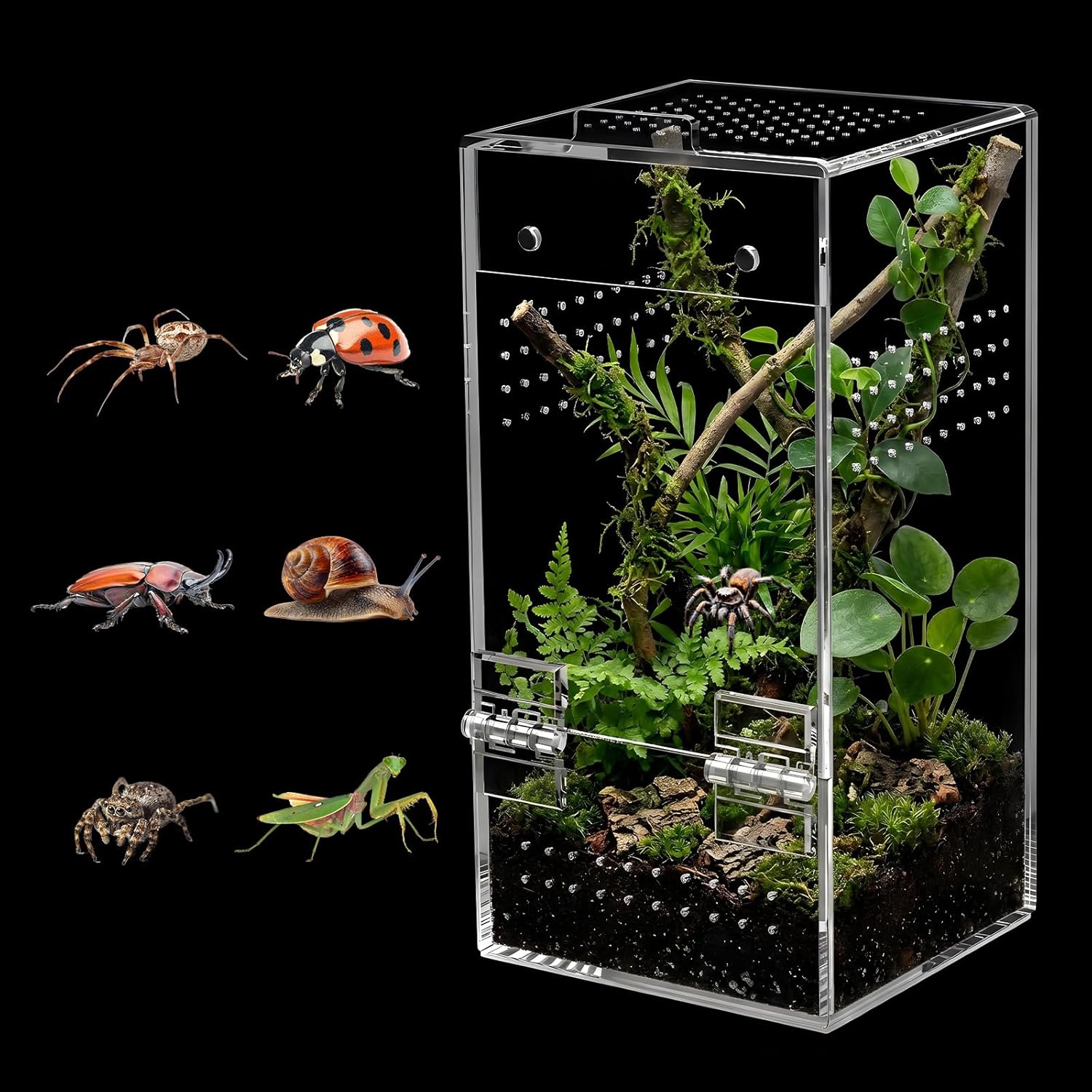
Tarantula Cribs Acrylic Enclosure 4x4x7
Front-opening acrylic enclosure perfect for jumping spiders. Easy access, good ventilation, and crystal clear viewing.
$20
Check Price on Amazon
Mini Digital Thermometer Hygrometer (2-Pack)
Essential for monitoring temperature and humidity. Small enough to fit inside the enclosure without disturbing your spider.
$6.99
Check Price on Amazon
Continuous Fine Mist Spray Bottle
The perfect misting bottle for spider enclosures. Fine, even mist that won't dump water on your spider.
$39.99
Check Price on Amazon
Flightless Fruit Fly Culture (Drosophila melanogaster)
Live starter culture of flightless fruit flies — the perfect first food for baby jumping spiders.
$15.99
Check Price on Amazon
LED Grow Light, Desk Lamp
Full-spectrum LED lamp with timer function. Jumping spiders need 10-12 hours of light daily to hunt effectively.
$16.99
Check Price on Amazon
Natural Cork Bark & Branch Assortment
Perfect for creating vertical climbing structures and hammock bases. Natural, spider-safe materials.
$14.99
Check Price on AmazonFrequently Asked Questions
References
Sources and Further Reading
- PetSmart. (2025). Regal Jumping Spider Care Guide.
- BugsInCyberspace. (2024). Pet Jumping Spider Care Sheet.
- r/jumpingspiders. (2021). An In-Depth Guide to Keeping Jumping Spiders.
- Liedtke, J., & Schneider, J. M. (2021). Personality and behavioral consistency in a spider: Mother-offspring correlation and developmental plasticity. Animal Behaviour.
- Chen, Z., et al. (2020). Personality, plasticity and predictability in jumping spiders. Scientific Reports.
- The Spruce Pets. (2024). Keeping Jumping Spiders as Pets.
- National Geographic. (2018). Jumping Spiders Nurse Their Young With Milk.
- Keeping Exotic Pets. (2024). Jumping Spider Care Sheet.
Related Reading
Looking for another amazing exotic pet? Check out our complete guide:
Bearded Dragon Care Guide: Complete Setup 2026 — Everything you need to know about another amazing exotic pet
About This Guide
This article was created through extensive research of keeper communities, breeder resources, and scientific literature on jumping spider care. It reflects the collective knowledge of the jumping spider keeping community rather than a single individual's experience. For personalized advice, always consult with experienced breeders or exotic veterinarians.


